Section 2
Segregation in America (Jim Crow Laws)
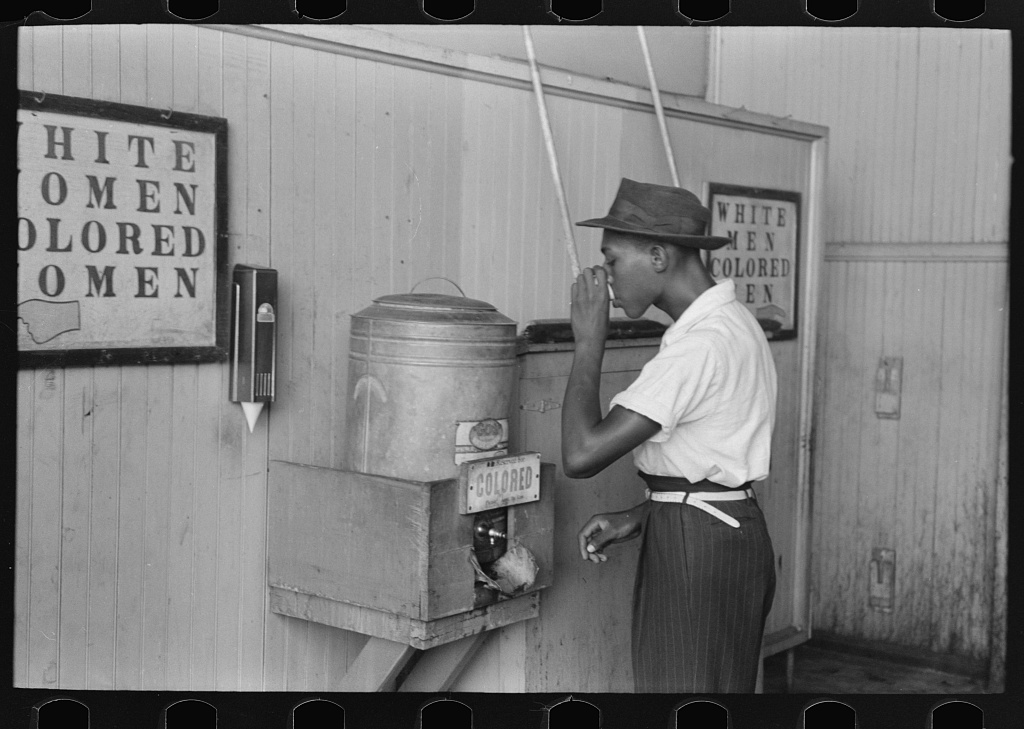
Segregation meant that Black and white Americans were kept apart by law, especially in the South. State and local rules called Jim Crow laws forced African Americans to use separate schools, restrooms, water fountains, restaurants, and sections of buses and trains.
"Separate but Equal"
In 1896, the Supreme Court case Plessy v. Ferguson said segregation was legal as long as the separate facilities were "equal." This idea became known as "separate but equal." In real life, the facilities for Black Americans were almost never equal, schools had old books, buildings were run-down, and money for Black communities was much smaller.
Daily Life Under Jim Crow
Segregation shaped everyday life. Black children walked past nicer white schools to attend their own underfunded ones. Black riders had to sit at the back of city buses and give up their seats to white passengers. Many restaurants would not serve Black customers at all. The system was designed to make African Americans feel like second-class citizens, and it was deeply unfair.