Section 5
Protests and Nonviolent Resistance
Activists believed that nonviolence was the strongest weapon they had. By refusing to fight back, they showed the country how cruel segregation really was, and won public sympathy.
Sit-ins
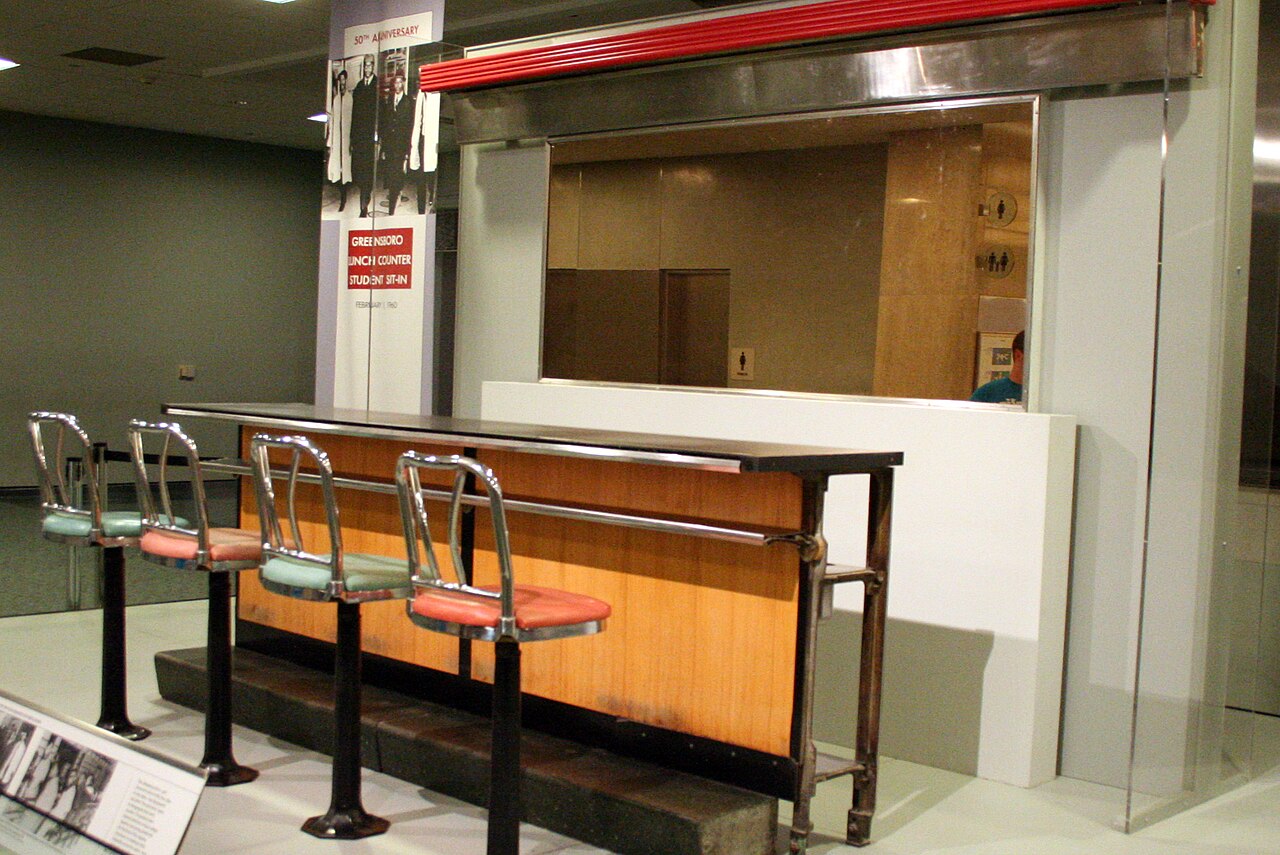
In 1960, four Black college students sat down at a "whites-only" lunch counter in Greensboro, North Carolina. They were refused service but stayed peacefully. The idea spread quickly, and thousands of students joined sit-ins across the South.
Freedom Rides
In 1961, Black and white activists called Freedom Riders rode buses together through the South to test new laws against segregated travel. They were beaten and their buses were attacked, but they kept going, forcing the federal government to act.
“Injustice anywhere is a threat to justice everywhere.”
Dr. King wrote this from a jail cell in Birmingham, Alabama, after being arrested for protesting. In simple terms: if unfair treatment is allowed in one place, it puts fairness everywhere in danger. It was a call for people across the country to care about civil rights, no matter where they lived.